BSc (Hons) Wildlife and Conservation
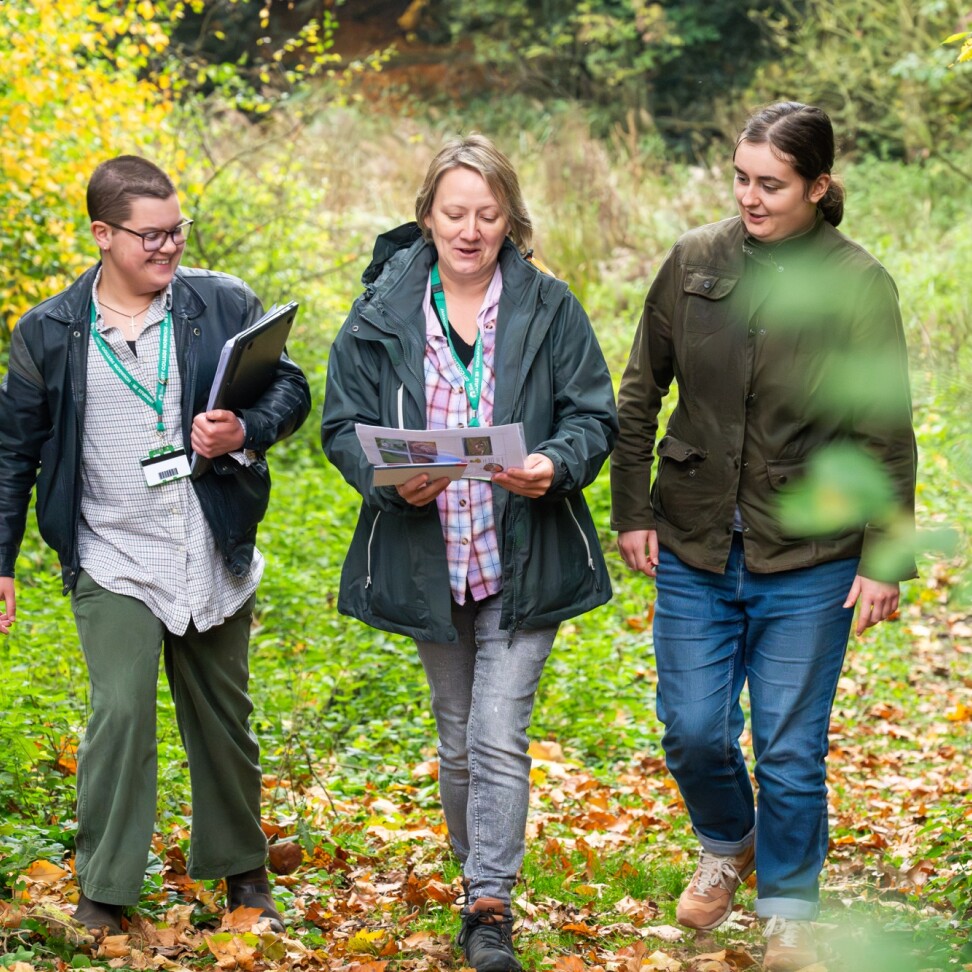
Are you passionate about nature, wildlife and the changing world? Our BSc (Hons) Wildlife and Conservation degree offers a comprehensive understanding of native and global animal and plant species, with opportunities to explore your individual interests through project-based research.
Our range of science and practical modules will help you develop the skills needed for careers in Ecological Consultancy and Wildlife Conservation.
- Level
- 6
- Entry Point
- Sept 2027
- Duration
- Full Time, 3 years
- Venue
- Easton College campus
- UCAS Course Code
- C184
Reasons to study
this course
In the first year of this Wildlife and Conservation degree, the modules provide a strong grounding in biology, botany, and British wildlife identification. As you progress to the second and third year, you will delve into advanced topics such as ecology, habitat management, and conservation biology, while refining your research skills. Your studies will culminate in the completion of a dissertation in the final year, showcasing your expertise and academic growth.
You will also benefit from access to our designated county wildlife site at the Easton College campus. This invaluable resource provides hands-on opportunities to develop practical species identification and field research skills, bridging the gap between academic knowledge and real-world application.

Jerry Kinsley - Course Leader BSc (Hons) Wildlife and Conservation
My name is Jerry Kinsley and I am the course leader for BSC (Hons) Wildlife and Conservation. I have taught at Easton college for over 20 years and have extensive wildlife conservation experience in a range of roles and organisations including the Norfolk Wildlife Trust, Mannington Estate and the Large Animal Research Group of Cambridge University.
I am passionate about conserving wildlife and the environment and this has been my main focus for all of my life. On the Wildlife and Conservation degree course, we will equip you with a range of practical skills and knowledge sought after in industry, for example: survey techniques, species identification, QGIS mapping and habitat management planning. In addition to this, we will support you to develop a range of transferrable and employable skills.
Please contact me if you wish to ask any questions.
Contact course leaderWhere will this
course take you?
On successful completion of the BSc (Hons) Wildlife and Conservation degree students will be well-equipped to progress into careers in the wildlife, conservation and ecological industries, or to progress onto postgraduate study in similar subjects at other institutions.
Course structure
This course is full time, 3 years duration. The programme is delivered over 2 days per week - 30 teaching weeks per year.
Level 4 modules
Academic Skills Compulsory - Core
Principles of Biology Compulsory - Non-Core
This module provides a foundation in cellular and molecular biology. You will explore the structure and function of cells, the classification of living organisms, and the physiological processes that sustain plant and animal life. Emphasis is placed on homeostatic mechanisms that enable organisms to adapt and survive in dynamic environments. The module also introduces the principles of heredity, including cell division and the laws of inheritance, alongside an examination of evolutionary processes such as natural selection, genetic drift, and speciation.
In addition to theoretical knowledge, this module aims to develop observational and practical skills through hands-on activities and laboratory work. These practical sessions are designed to enhance your understanding of fundamental biological processes and introductory scientific techniques, equipping you with essential skills for further study and research in the biological sciences.
Assessment:
-
Exam (100% of module weighting)
Principles of Environmental Science and Ecology Compulsory - Non-Core
This module introduces the environmental systems underpinning the ecology of life on Earth and which provide the physical resources to support the flora and fauna that a growing population relies on. You will explore how each natural system is intrinsically linked
Ecology is essential to our understanding of how to manage the land, its’ resources and biodiversity. Land use, policy and practice have often proved disastrous where there has been a lack of understanding of the way populations and ecosystems function at both large and small scales. This has resulted in declines in biodiversity and soil productivity.
This module aims to provide a broad understanding of the Earth’s natural system, and an underpinning understanding of soil and water resources is essential to the sustainable management of the local, national, and global environment. You will explore and examine geographical climate patterns and the impact that climate change is having on global biomes and species.
The module allows students to learn fundamental ecological theories in terms of the way that individuals, populations and species grow, interact, and are distributed. The way in which energy is transferred through ecosystems and impacts on the length of food chains and numbers of individuals at varying trophic levels will be considered and it will further review the way ecosystems alter with time and the influence of living organisms on successional processes.
Assessments:
-
Essay (50% of module weighting)
-
Exam (50% of module weighting)
Practical Habitat Skills Compulsory - Non-Core
In order to plan and project manage practical work in the land-based sector it is vital that the site manager understands the technical aspects of the proposed task(s). Site managers cannot ignore the importance of time-scales, budgets and the management of materials, tools and labour.
This module aims to equip you with a range of practical skills appropriate to working in conservation management that will enable you to undertake specified construction, maintenance and habitat management tasks. These tasks will be focused upon the creation and management of semi-natural habitats.
The module aims to develop your practical confidence which will allow you to instruct and, where necessary, supervise staff and volunteers in undertaking practical tasks, as well as providing you with the opportunity to develop specifications and design briefs as required when engaging with outside contractors.
The health and safety requirements of practical tasks are key components of the module. You must consider the implications of tool and livestock use and the need for risk assessment in project planning and implementation.
You will undertake practical sessions on the College Nature Reserve and other sites on the college estate.
Assessments:
-
Practical Portfolio (50-% of module weighting)
-
Project Plan (50% of module weighting)
British Wildlife and Identification Compulsory - Non-Core
British wildlife and their habitats have been shaped by hundreds of years of human intervention leading to a diversity of habitat types unusual for such a small land area. Site management requires a good knowledge of the ecological principles underpinning the species and habitat characteristics of a site.
This module equips you with the skills and knowledge to identify a range of British wildlife and habitat types. This will include the recognition of dominant and characteristic vegetation as well as knowledge of significant plant and animal species found within each habitat. The ability to identify key species from a wide range of taxa is key to appreciating the biodiversity value of a range of habitats.
You will develop an understanding of the abiotic and biotic relationships that determine the nature and diversity of each habitat.
The module develops understanding about the strategies for conserving species and habitats in the United Kingdom. The anthropogenic impacts on UK wildlife will be considered and what mechanisms are in place to protect wildlife in this country from the impacts of farming, urban development, pollution and invasive alien species. If the multifunctional nature of land in the British countryside is to be conserved, then a balance must be found between conflicting land users.
Assessments:
-
Essay (50% of module weighting)
-
Collection (50% of module weighting)
Introduction to Botany Compulsory - Non-Core
This module contains the basis of plant science and is an introduction to plant physiology and taxonomy, covering general botany including morphology and plant anatomy.
The module will explore the ways in which plants acquire and process energy, nutrients and water, and how plants reproduce, grow, and develop.
The module will familiarise you with botanical terminology and will enable you to learn the key diagnostic features of the commonest plant families to identify representative species from these families in the field.
Assessments:
-
Essay (50% of module weighting)
-
Exam (50% of module weighting)
Level 5 module
Research Methods Compulsory - Core
This module develops your ability to evaluate quantitative, qualitative, and mixed‑methods research. It enables informed comparison of methodological approaches within biological and industry‑relevant contexts. Through critical appraisal of published studies, you will build the skills needed to assess methodological validity, reliability, data collection, and data management. You will also learn to apply appropriate descriptive and inferential statistics, with emphasis on accurate interpretation and effective communication of results.
You will learn to produce a formal research proposal by developing research questions, aims, objectives, and hypotheses. You will complete a structured literature review that identifies knowledge gaps and supports a clear research rationale. You will design a methodological approach that includes a justified sampling strategy and suitable data collection methods. You will also select appropriate data analysis techniques and demonstrate awareness of ethical responsibilities. Together, these skills will enable you to evaluate biological research and plan scientifically robust investigations.
Assessments:
-
Time Constrained assessment (50% of module weighting)
-
Research Proposal (50% of module weighting)
Field Ecology Compulsory - Non-Core
This module will familiarise you with a range of survey and monitoring techniques used within the wildlife conservation and ecological consultancy field and will build on the identification skills acquired in British Wildlife and Identification. You will undertake a range of habitat and species surveys. Familiarity with field survey techniques is an important component of working in the wildlife conservation sector and this module gives you the framework and understanding of surveys and monitoring programmes. You will also be equipped to take part in voluntary monitoring programmes and citizen science projects.
Surveys and monitoring programmes undertaken will encompass industry standard habitat and species surveys and will be evaluated and analysed. Being able to analyse and interpret results is an essential requirement of the site and species assessment process.
You will devise and undertake a field ecology investigation of your choice and will analyse the data from this investigation and present your findings to your peer group. This will enable you to specialise in an area of your choice or where you have the most expertise.
Having practical field and analytical skills will enable you to discuss the complex issues in the development of management plans, species recovery plans and planning mitigation
Assessments:
-
Portfolio (40% of module weighting)
-
Report (60% of module weighting)
Behavioural Ecology Compulsory - Non-Core
This module will explore the inter-relationships between behaviour, ecology, and evolution of animals and plants. You will learn why organisms behave under varying ecological conditions and how they respond and adapt to changes in their environment. The principal models and theories in relation to behaviour and behavioural ecology will be examined, using case studies and examples to illustrate.
You will seek to explain the evolution of specific behavioural patterns and have an opportunity to undertake research into behavioural ecology theories for a selected species. This will involve experimental design, research, interpretation, analysis, and presentation of results. Through understanding key concepts of behavioural ecology, you will be able to make more informed choices with regards to conservation within other subject areas such as habitat management and countryside recreation.
Assessments:
-
Exam (50% of module weighting)
-
Experimental Project Report (50% of module weighting)
Management Planning for Habitats Compulsory - Non-Core
Without management planning many important habitats and their species may be lost and the diversity of the British landscape eroded. This module aims to allow you the opportunity to focus on the conservation management of one selected site of conservation interest that is relevant to the local area or of particular interest to the individual. The conservation of habitats, and the species that they contain, is the central pillar of the management of biodiversity. This module examines the approaches to achieving sustainable management of a site with specific habitats and associated species. Its aim is to equip you with the ability to apply conservation approaches to the site’s management that will enhance the wildlife and amenity value of habitats.
This module will equip you with management planning skills, practical survey and monitoring techniques as well as communication and negotiation skills. These are the key tools that facilitate scientific and evidence-based planning to ensure that conservation objectives are met in the long-term management of sites.
This module assists you to assess the strategic mechanisms available to influence these factors, and to propose appropriate mitigation and remedial activity. By the completion of this module, you will be able to formulate appropriate plans to conduct management activities on selected habitats.
You will produce individual management plans to an industry standard format, and a copy of the management plan will be presented to the owner/manager of the site.
Assessments:
-
Survey Report (50% of module weighting)
-
Management Plan (50% of module weighting)
Mapping Skills for Project Work Compulsory - Non-Core
Geographical information systems (GIS) are commonly used across the conservation and environmental sectors to produce both digital and cartographic maps. Increasingly, employers are looking for skills in GIS when advertising job roles and therefore, an understanding of these types of programs will be useful within the field.
This unit aims to showcase the uses of GIS, evaluating its effectiveness as a digital tool for spatial data analysis. There will also be a considerable amount of time in sessions spent on building skills within a particular piece of GIS software, such as QGIS.
Assessments:
-
Map and Rationale (50% of module weighting)
-
Presentation (50% of module weighting)
Marine Biology and Coastal Ecosystems Compulsory - Non-Core
This module offers the opportunity to develop skills and knowledge of marine phyla and habitats.
The campus is ideally located for marine and coastal ecosystems, due to the proximity to the East Anglian coastline. In this area there are a variety of coastal and marine ecosystems including estuaries, intertidal mud flats, sand dunes and saltmarshes as well as the chalk reef just off the North Norfolk coast.
In addition, the East Anglian inshore and coastal regions support a wide range of industries, including wind turbines and commercial fisheries.
This module aims to provide you with a sound understanding of marine biology and coastal ecosystems through studying the organisms that inhabit marine and coastal ecosystems, with an emphasis on UK species for identification purposes. This will be achieved through examining the principle phyla both in theory and through practical and fieldwork classes.
You will gain knowledge of coastal habitats and the effects of different environmental and biological conditions during the module via a range of both theory sessions and fieldwork.
The module additionally aims to appraise students of the human impact on marine and coastal ecosystems.
Assessments:
-
Exam (50% of module weighting)
-
Essay (50% of module weighting)
Level 6 modules
Modern Scientific Communication Compulsory - Non-Core
During this module, there will be an exploration of the methods currently used to communicate scientific information to various stakeholders in the community. In doing so, you will identify the most effective methods of conveying innovative ideas and implementing them in society. This unit will also provide opportunities to build teamwork and leadership skills for future application in future job roles.
Several different scientific communication methods will be examined to identify their strengths and weaknesses, both in theory and in practice. This will include social media, publishing scientific literature, policy briefings, conferences, popular media platforms, podcasts, exhibitions, and more.
Throughout the sessions, you will get the opportunity to practice some of these techniques and attend a conference to make your own judgements on the effectiveness of these methods in conveying new scientific information. There will be various opportunities for you to link these practices with industry-specific subjects and current scientific affairs within a field of interest. This module will work in conjunction with the careers team to help build skills in professional development.
Through the production of a portfolio containing work completed throughout this module and a reflective account of any activities that you have participated in, you should, by the end, be able to identify the most effective communication methods for different stakeholders and make recommendations to improve current practice in the scientific community. You should also have a firm understanding of the opportunities you have to take these skills into various scientific sectors.
Assessment:
-
Portfolio (100% of module weighting)
Ecological Techniques for Industry Compulsory - Non-Core
The monitoring and evaluation of flora and fauna remains a key element of ecological practice. Techniques and technology for undertaking work in the field are constantly under development and to remain industry competent; practitioners need to stay up to date. This may be regarding recent developments in monitoring, use of mechanical resources whilst also maintaining a sound knowledge and understanding of taxonomy. The module aims to allow you to hone your skills in the wide field of ecology from the perspective of identifying the species of animals and plants present on selected sites of interest within East Anglia. You will focus more specifically on the most appropriate method of surveying and monitoring species on these sites and discuss how effective report writing and imaginative planning might mitigate land-use changes within the local and national planning framework. College staff will deliver the core of the module with some input from guest speakers from local authorities and ecological consultancies.
Assessment:
-
Exam (50% of weighting)
-
Report (50% of weighting)
Dissertation Compulsory - Core
This module enables you to undertake an independent academic research project based on a topic of your own choosing, using evidence‑based methodologies and appropriate research techniques. Projects may be completed in collaboration with local businesses or charities, or may involve the analysis of existing secondary datasets, the collection of primary data, or an evaluative approach to a defined research problem.
You will be allocated a supervisor who will provide guidance on topic selection and support the development and progression of the project. You are encouraged to use the research project as a summative opportunity to reflect upon your academic development across the degree programme.
The dissertation may take the form of either a structured, discursive, and evaluative thesis or a data‑driven research project. You will undertake an empirical project and will have the opportunity to design and implement original research, involving the collection, analysis, and interpretation of data within the context of existing scholarly literature.
Through completing the module, you will develop practical and transferable research skills, including ethical awareness, project planning, data analysis, and professional communication, thereby enhancing your preparedness for employment or further postgraduate study.
Assessment:
-
Dissertation Thesis (80% of module weighting)
-
Oral Viva (20% of module weighting)
Global Biodiversity Compulsory - Non-Core
There has been a significant decline in global biodiversity and serious concerns that we may be facing another mass extinction. It is now of fundamental importance that humans understand the mechanisms that drive areas of high biodiversity, where these hotspots are found, what are the threats and what can be done to negate the impacts.
This module provides an understanding of the phenomenon of biodiversity and investigates the factors that promote it and those that threaten it. You will explore the mechanisms by which biotic diversity is generated and investigate the benefits associated with biodiversity. You will have the chance to discuss the threats facing biodiversity on a local and global scale and will be encouraged to explore and evaluate practical conservation measures to ensure the maintenance and enhancement of biodiversity for future generations. The module aims to allow you to develop an appreciation of the value of biodiversity as a resource in economic and aesthetic terms from the value of an individual organism to large scale ecosystem services/natural capital. It will provide you with a sound theoretical framework from which to assess the significance of local, national, and international developments on the world’s biodiversity.
Assessment:
-
Essay (50% of module weighting)
-
Exam (50% of module weighting)
Environmental Education and Interpretation Compulsory - Core
Recent research shows the UK population is increasingly disconnected from nature, despite evidence from the Covid-19 pandemic that access to natural environments supports physical and mental wellbeing. Protecting habitats requires public understanding and engagement, and outdoor experiences offer opportunities to foster environmental awareness and encourage pro-environmental behaviours. A key skill in nature conservation is effectively communicating ideas to diverse audiences using interpretative media.
This module equips you with essential theories and methods for outdoor learning. It develops the professional skills required to design and deliver engaging activities. You will also learn to create interpretative resources for use in nature reserves, schools, and communities. It explores the history of environmental education, links activities to interpretation techniques, and examines their impact on wildlife and behaviour. You will develop organisational, teaching, and leadership skills while creating, implementing, and evaluating outdoor learning experiences and media as part of your assessment.
Assessments:
-
Site Report (50% of module weighting)
-
Portfolio (25% of module weighting)
-
Oral Viva (25% of module weighting)
Course details
Assessment methods
You will be assessed through a broad range of strategies designed to evaluate both practical and theoretical skills. These include academic posters, essays, literature reviews, and project work such as proposals, plans, presentations, and reports. Assessments also encompass oral presentations, reflective journals, practical evaluations, examinations, laboratory reports, and the creation of management plans, ensuring a comprehensive approach to measuring student learning and achievement.
Awarded by
This course is awarded by the University of East Anglia and regulated by The Office for Students.


Entry requirements
UCAS points
Our typical offer is 80 UCAS tariff points from A Levels or equivalent
GCSEs
A minimum of GCSE maths, English and science (preferred) grade 4/C or above
Scottish Highers
UCAS points from Scottish Highers or Advanced Levels are accepted
BTEC
UCAS tariff points from BTEC or City and Guilds diplomas are accepted
Open University
Open University credits in lieu of A Levels are accepted
Access to HE Diplomas
Access to Higher Education Diplomas at Pass level with suitable science content are accepted
Contextualised Offer
You may also be eligible for a contextualised offer for this programme, please see our Contextualised Offer page for further details and to check your eligibility.
Applicants over 21 years of age, who do not have relevant UCAS points, will be reviewed on a case-by-case basis but should demonstrate evidence of an appropriate qualification, experience in the field or a strong interest.
Applications from students whose first language is not English are welcome. For International students we require evidence of proficiency in - English (including writing, speaking, listening and reading); the required minimum is IELTS Academic (SELT) 6.0 overall (minimum 5.5 in all components). Please contact the Admissions Team for advice and guidance.
Course fees
£10,050 per year for UK students.
£15,804 per year for international students (students from outside of the UK).
Other course costs
It would be good to invest in a warm waterproof coat, wellie boots, waterproof trousers and sturdy walking boots. You may also find it useful to have binoculars. There may also be trips that require a contribution.
We were awarded a TEF Silver rating overall in 2023, achieving this for both student experience and student outcomes.