BSc (Hons) Applied Sports Performance Coaching and Exercise Science
This degree is a challenging blend of academic and vocational/professional study that encourages you to develop and be a reflective lifelong learner by providing a broad, analytical and integrated study of sport performance coaching and exercise sciences within Levels 4 to 6. It aims to equip you to consider how you can enhance your own and others’ performance in pursuit of your chosen career through experiential reflection and learning.
- Level
- 6
- Entry Point
- Sept 2027
- Duration
- Full Time, 3 years
- Venue
- Easton College campus
- UCAS Course Code
- C603
Reasons to study
this course
This programme includes a Applied Sports Performance Coaching and Exercise Science pathway, which all students will be initially enrolled on, and can be continued into the second and third year of study, with the option to select a different pathway in year two. The alternative pathways are Strength and Conditioning, or Therapy and Injury Management, allowing you to concentrate on particular areas within sports science. Please note that the optional pathways will only be offered in year two in cases where minimum group sizes of six are maintained. If this isn’t achieved, then all students will remain on the original programme or all agree to change on to one programme of study.
Depending on the pathway taken in the second year of study, you will achieve one of the following awards:
- BSc (Hons) Applied Sports Performance Coaching and Exercise Science
- BSc (Hons) Applied Sports Performance Coaching and Exercise Science (Strength and Conditioning)
- BSc (Hons) Applied Sports Performance Coaching and Exercise Science (Therapy and Injury Management)
Successful completion could support you to progress to available postgraduate routes and/or graduate level employment. The course aims to continue to offer a progression route from vocational Level 3 provision (BTEC, VCTC and Access courses to name a few) and also academic Level 3 qualifications (A Levels). Furthermore, to allow mature students with appropriate sport and exercise experience and suitable academic qualifications to enter on to the course.

Ben King - Course Leader BSc (Hons) Sport, Health and Exercise Science
Hello, I'm Ben and I hold a Master’s degree in Higher Education Practice, a BSc (Hons) in Sport Coaching, Performance Psychology and Sustainable Design, and a Postgraduate Certificate in Higher Education and Certificate in Education teaching qualifications.
I have worked in the football industry as a development coach for several years, and continue to work with semi-professional football clubs alongside my role leading this Sport, Health and Exercise Science degree. I am passionate about making sure the course supports industry needs, as well as supporting the progression of our students. I work alongside module leaders who have a diverse range of skills in the sports science sector. If you have any specific questions about the course, please get in touch!
Contact course leaderWhere will this
course take you?
After completing the course, previous students have progressed onto a range of routes including:
- Teacher training qualifications
- Leisure assistants and managers
- Sports therapists
- Sports scientists
- Video analysts
- Sports coaching
- Working for the NHS
- Starting their own business as a personal trainer
Or progressing to other degrees such as:
- PGCE Physical Education
- MSc Physiotherapy
- MSc Sport Science/ Injury Prevention/ Sports Performance/ Strength and Conditioning/ Sports Psychology

Student stories
Course structure
This course is studied full time over three years. The programme is delivered over two days a week - 30 teaching weeks per year.
Sports, Health and Exercise pathway
Level 4 modules
Professional and Academic Skills Compulsory - Core
Professional and Academic Skills is a core module designed to aid your success in your programme of study and industry of choice.
This module aims to:
- Provide a framework of professional and academic skills at undergraduate level
- Promote your recognition of the value of research, critical analysis and reporting in the context of your programme specialism
- Aid in the identification and development of a developmental approach to learning and to the professional skills required for employment
Having completed this module, you should be able to:
- Use a range of academic approaches and techniques
- Reflect on your personal performance and development in a range of professional and academic skills
- Apply appropriate judgement in selecting and analysing academic sources and data
- Communicate effectively with peers, assessors and wider audiences in a variety of media
- Apply the Harvard Referencing System correctly and consistently in your academic work
- Meet the professional standards for graduate employment in your chosen industry
Whilst delivery and the learning outcomes are generic, the content and output of your work will reflect the programme specialism you are studying towards.
Assessment:
Group Presentation (50%)
Reflective Journal (50%)
Anatomy and Human Movement for Performance Compulsory - Non-Core
The module aims to develop your understanding of how the human body’s structure relates to its function within sport and exercise contexts. This module builds foundational knowledge that prepares students for advanced study in human movement and performance. You will gain an understanding of core biomechanical concepts and learn how to apply them to the analysis of human movement.
You will examine a range of fundamental bodyweight movement patterns and learn how to progress through resistance training, gymnastics, plyometrics, and weightlifting. A strong focus will be placed on fault identification and error correction, alongside exploring effective coaching delivery methods. You will be expected to engage in extensive practical rehearsal of these techniques to establish a solid foundation of competency for subsequent modules.
Assessment:
Exam (75%)
Practical (25%)
Health and Fitness Compulsory - Non-Core
The module introduces you to fundamental principles, methods and practical techniques associated with health, fitness, strength, and conditioning through a range of lectures, workshops, and practical seminars. Through this technical and theoretical knowledge, this module aims to provide you with a set of coaching tools which, when applied appropriately, enhance health and fitness for a range of populations.
Assessment:
Presentation (40%)
Exam (60%)
Introduction to Sports Therapy Compulsory - Core
Building upon anatomical and physiological knowledge and the appropriate prevention interventions to support injury risk factors, this module aims to introduce an awareness of injury identification. You will develop the skills to conduct subjective and objective assessments, which will cover active, passive, and resisted range of movements, postural analysis and functional testing.
This module also provides the opportunity to learn fundamental massage techniques to apply effective treatment for the patient. On completion, you will be able to demonstrate fundamental massage techniques, ensuring that employment standards are maintained which will form a foundation for more advanced techniques in year 2. In addition, you will be made aware of commercial opportunities and progression into the field of sport massage.
- Core for BSc (Hons) Applied Sports Performance Coaching and Exercise Science (Therapy and Injury Management) pathway.
- Non-Core for BSc (Hons) Applied Sports Performance Coaching and Exercise Science; and BSc (Hons) Applied Sports Performance Coaching and Exercise Science (Strength and Conditioning)
Assessment:
Injury Report (25%)
Practical Assessment (25%)
Live Massage with Q&A (50%)
Exercise Physiology Compulsory - Non-Core
This module examines the essentials of exercise physiology, including concepts in energy, respiration, circulation, nervous control, endocrine secretions, and muscular activity. Exercise physiology will be studied in a pre-exercise, exercise, and post-exercise style.
Assessment:
Case Study (100%)
Community Coaching and Development Compulsory - Non-Core
This module enables you to develop your understanding of the coaching process and to develop your coaching skills in both theoretical and practical situations as a coaching philosophy will be developed.
You will investigate the planning of coaching sessions (both short term and long term), coaching methods for working with individuals/teams, the influence of other factors that impact coaching, coaching skills and how the coach develops those skills. The module will also include exploration of sports development initiatives and increase your awareness of key concepts within sports development. You will be expected to contribute to the development of a local initiative that offers appropriate activities to increase sports participation to a specific target group.
Assessment:
Group Presentation (50%)
Reflective Commentary (50%)
Level 5 modules
Applied Sports Therapy and Injury Management (available on the Therapy and Injury Management pathway only) Compulsory - Core
This module will support you to understand in greater detail the functional changes of injured body tissue. This will inform and develop your competence of clinical reasoning in order to manage injuries more effectively. You will be encouraged to work alongside case study athletes (minimum of 15 hours) to provide sport therapy support and practice advanced massage and mobilisation techniques to support athlete recovery and physical development. Finally, this experience is reflected in terms of professional conduct, standards, and athlete recovery/improvements.
Assessment:
Observed Structured Clinical Examination (OSCE) (50%)
Video Demonstration (25%)
Reflective Commentary (25%)
Coaching and Mentoring Compulsory - Non-Core
This module enables you to further develop your knowledge, understanding and practical application of the coaching process from Level 4. You will develop short term and long-term coaching plans; further develop and refine coaching methods to improve performance of individuals/teams; develop strategies and tactics to improve performance considering the wider coaching environment; demonstrate a good technical knowledge of your own sport; promote your own coaching philosophy through theory and practical situations. You will explore the application of your own coaching skills and observe the coaching skills of peer coaches.
This module will also provide an introduction to mentoring; how it can be used to develop the coaching process of a coach, the skills required to mentor, reasons for mentoring. You will be required to undertake mentoring of a peer coach.
Assessment:
Practical Observation (35%)
Reflective Commentary (30%)
Mentor feedback (35%)
Nutrition for Sport, Performance and Exercise Compulsory - Non-Core
This module will provide you with an understanding of the current theories concerning the relationship between diet, lifestyle, and health. You will investigate the role of diet in health and disease to develop an understanding of factors that promote health. The focus will then shift towards the methods available for measuring dietary intake; you will have the opportunity to analyse nutrient intake. The module will be completed by you, understanding the effect dietary intake can have on the body when performing physical activity (e.g. training and performance).
Assessment:
Case Study (50%)
Exam (50%)
Performance Physiology and Laboratory Techniques Compulsory - Non-Core
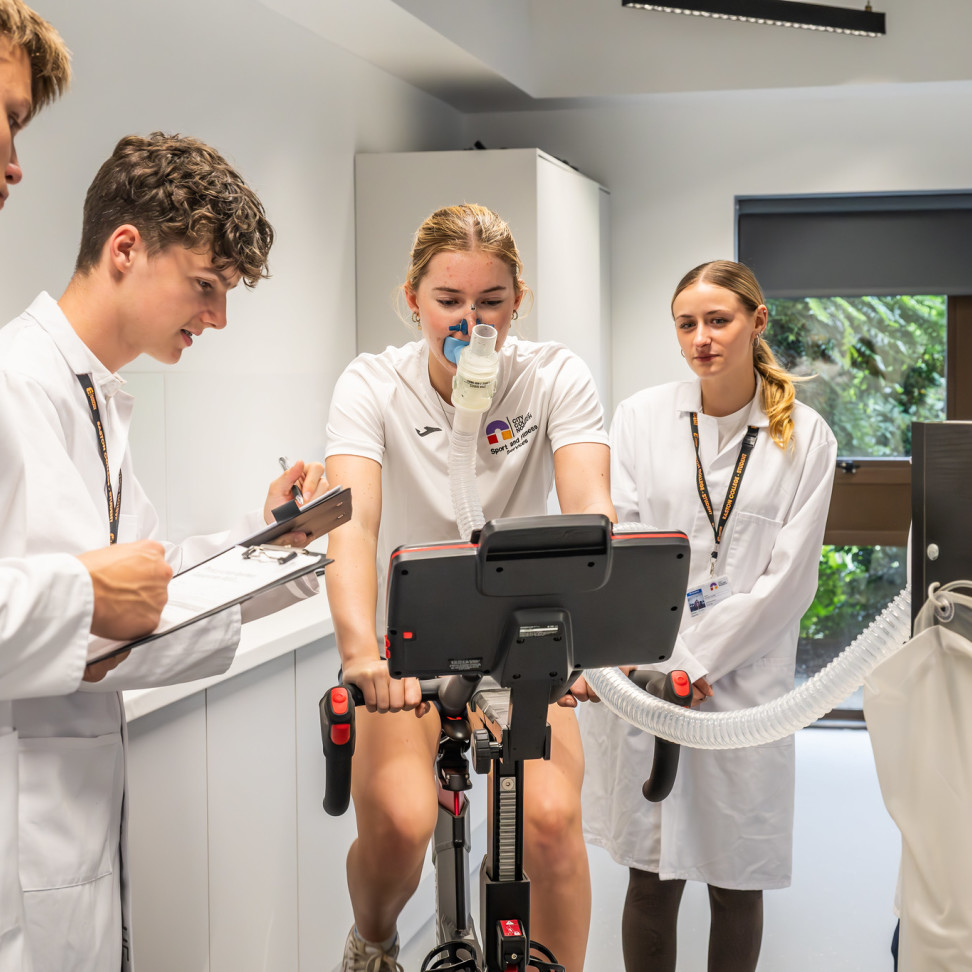
You will explore and analyse the human aerobic and anaerobic capacities in terms of measured physiological responses to exercise stressors. You will witness how the body adapts to acute exercise stressors and will learn how humans adapt when exposed to chronic exercise stressors. You will be exposed to a range of industry standard human performance testing procedures and required to be proficient in delivery and evaluation of these procedures.
Assessment:
Group Practical Exam (50%)
Laboratory Report (50%)
Sport Development and Management (available on the main Applied Sport Performance Coaching and Exercise Science pathway only) Compulsory - Core
This module determines the skills necessary for effective management within the sport and leisure industry, including marketing, people management and financial, economic, legal and ethical principles. You will develop a critical understanding of what the sports development and sports management environment looks like, the skills required to succeed and types of challenges that exist.
Assessment:
Open Book Exam (50%)
Report (50%)
Sport and Exercise Psychology Compulsory - Non-Core
Applied sport psychology is increasingly being used by athletes, coaches, and management to achieve and maintain world class performance in a highly competitive realm. This module considers some of the approaches the sport psychologist can take to work with the athlete and support team in order to achieve optimal performance. You will develop your understanding of the importance of a solid theoretical approach to all applied work and consider the significance of providing psychological support beyond traditional interventions. In keeping with the increasing importance of exercise and lifestyle physical activity in public health, the module will also explore the tenets of exercise psychology particularly with reference to models of behavioural change. There will be opportunity also to consider further exercise psychology concepts such as adherence, social influence, body image and wellbeing.
Assessment:
Case Study (100%)
Sport, Health and Exercise Research Skills Compulsory - Core
This module is designed to enable you to further develop the learning and development skills introduced in the Professional and Academic Skills module in year one (or equivalent). It provides the opportunity for you to focus on practice-based research and evaluation skills.
The module will develop an appreciation of qualitative and quantitative methodology, research methods and critical thinking skills appropriate to the subject area. This will provide a foundation for research at Level 6.
Assessment:
Open Book Exam (70%)
Research Proposal (30%)
Strength and Conditioning Methods (Available on the Strength and Conditioning pathway only) Compulsory - Core
The module aims to build upon the fundamental principles, methods and practical techniques introduced in health and fitness and anatomy and human movement modules through a range of lectures, workshops and practical sessions. The module will give you the practical skills that will enable the planning and delivery of safe and effective medium-term exercise programmes in a variety of settings.
The focus is on developing intermediate level practical skills and theoretical knowledge of a coach, fitness instructor and personal trainer in the strength, conditioning and fitness industry whilst exploring, practicing, and evaluating different training systems.
Assessment:
Video Log Case Study (50%)
Lifting Practical Assessment (25%)
Plyometrics/Agility/Speed Practical Assessment (25%)
Level 6 modules
Research Project (Dissertation) Compulsory - Core
This module will enable you to demonstrate that you can take substantial responsibility for your own learning. It does this by offering you the opportunity to choose, undertake and report upon a major investigation of a selected topic relevant to the sport, performance, and exercise science industry. By challenging you to manage your own learning, the research project makes a major contribution to the honors classification process.
Assessment:
Literature Review and Methodology (30%)
Presentation of Results (10%)
Journal Article (60%)
Exercise for Specific Populations (available on the Strength and Conditioning pathway only) Compulsory - Non-Core
This module is intended to examine the importance of exercise for optimal health and longevity across a lifespan. Exercise is important in lowering the risk of a wide variety of chronic diseases and, as a non-pharmacological intervention; it is an essential part of the rehabilitation process for people. Exercise can have both a preventative and management role if prescribed appropriately. It is vital that exercise programs are modified and prescribed relative to specific populations. The population groups studied can include children, elderly, ante/post-natal, disabilities, and those with chronic diseases such as coronary heart disease (CHD), diabetes, obesity, asthma.
Core: BSc (Hons) Applied Sports Performance Coaching and Exercise Science (Strength and Conditioning)
Non-Core: BSc (Hons) Applied Sports Performance Coaching and Exercise Science; or BSc (Hons) Applied Sports Performance Coaching and Exercise Science (Therapy and Injury Management)
Assessment:
Exam (Open Book) (50%)
Poster Presentation (50%)
Performance Analysis Compulsory - Non-Core
This module provides an advanced and applied exploration of performance analysis within sport, equipping you with the critical and practical skills required to evaluate athletic and team performance in competitive environments. The module enables you to understand, critique, and apply performance analysis methodologies that underpin evidence‑based decision‑making in contemporary coaching and support contexts.
You will engage with the theoretical foundations of performance analysis, including the development, selection, and validation of key performance indicators (KPIs) specific to their chosen sport. Through this process, you will critically review the credibility and relevance of KPIs and evaluate how they capture meaningful aspects of performance. The module places strong emphasis on the design and justification of notational or match analysis systems, enabling you to tailor analytical approaches to the demands of individual athletes or teams.
A core component of the module focuses on the practical application of notational and match analysis techniques. You will collect, code, interpret, and present performance data, using it to analyse the effectiveness of technical, tactical, and behavioural elements of performance. You will also formulate informed recommendations to support performance enhancement and athlete or team development.
Additionally, the module encourages you to explore the complex influence of situational variables - such as opposition quality, match context, environmental conditions, and tactical decisions - on performance outcomes. By critically analysing these contextual factors, you will develop a deeper understanding of the dynamic nature of sports performance and how analytical insights must be interpreted within their broader competitive context.
Overall, the module aims to develop you to be capable of producing high‑quality, contextually informed performance analysis that contribute meaningfully to coaching processes and performance improvement within sport.
Assessment:
Mini Literature Review (50%)
Athlete Feedback Presentation (50%)
Injury Rehabilitation for Performance (available on the Therapy and Injury Management pathway only Compulsory - Core
This module provides an in‑depth exploration of advanced principles in musculoskeletal injury management within a sporting context. You will critically examine joint‑specific injuries, contemporary rehabilitation approaches, and the interconnected psychological and nutritional factors that influence return‑to‑sport outcomes. Through theory‑to‑practice application, you will develop the capacity to design evidence‑based rehabilitation plans that are progressive, sport‑specific, and aligned with current best practice in performance health.
You will be expected to engage in independent critical analysis, explore current research, and apply advanced theoretical frameworks to real‑world sporting scenarios. The module supports learners aspiring to careers in sport rehabilitation, strength and conditioning, sport therapy, physiotherapy, and athlete support roles
Assessment:
Poster Presentation (50%)
Mini Literature Review with Research Log (50%)
Performance Coaching and Athlete Development (available on the main Applied Sport Performance Coaching and Exercise Science pathway only) Compulsory - Core
This module provides an advanced exploration of coaching practice within different performance sport environments. You will critically engage with contemporary theories, research, and debates surrounding talent identification, athlete development, and performance coaching methodologies. Through a blend of academic inquiry and applied learning, the module deepens understanding of the complex, multifaceted nature of coaching within an array of performance settings from grassroots to elite. Grassroots sport is often associated with recreational play however it acts as the foundation of the player development pyramid.
A key component of the module is the application of qualitative research methods to real‑world coaching contexts. You will conduct and thematically analyse an interview with a practising coach, enabling you to connect theoretical concepts with lived professional experience. This analytical process supports the development of reflective and evidence‑informed coaching practice - essential for future practitioners operating in performance sport.
Upon completion, you will be equipped to critically evaluate performance coaching environments, interpret and synthesise current literature, and utilise research tools to better understand coaching behaviours, philosophies, and developmental processes.
Assessment:
Digital Documentary (40%)
Recorded Interview Thematic Analysis (60%)
Professional Development and Practice Compulsory - Non-Core
This module is designed to bridge the gap between academic learning and real-world application, empowering you to become reflective practitioners and innovative event organisers within the sports industry. Through a combination of professional reflection, market-driven decision-making, and hands-on event management, you will develop the skills and confidence to thrive in diverse sporting environments.
You will conduct in-depth market research to identify community needs, trends, and opportunities within the sports sector. You may use Norfolk’s Joint Strategic Needs Assessment (JSNA) to inform an offer. This evidence-based approach will inform your design and delivery of a sports/health-related offer that meets local community demands.
Working collaboratively, you will plan, organise, and execute a sports/health event within a sports centre environment, applying principles of project management, marketing, and stakeholder engagement. This practical experience will enhance leadership, communication, and problem-solving skills.
The module emphasises the importance of inclusivity and social responsibility, encouraging you to create events that foster community participation and promote health and well-being. You will critically evaluate your personal and professional development during the planning and delivery of your sports offer, identifying strengths, areas for growth, and strategies for lifelong learning. Reflection will be guided by industry standards and employability frameworks such as Quest and The Active Standard to ensure relevance and impact.
Assessment:
Sport Event Planning and Delivery Project (60%)
Evaluation and Professional Reflection (40%)
Course details
Assessment methods
Assessments are varied and innovative and are aimed to develop transferable skills to support employability. They will include scientific reports, exams, practical assessments, video logs, essays, journals, individual and group presentations, professional reports and literature reviews. Each module assessment has been considered alongside the knowledge, skills, and behaviours required for employment. Therefore, assessment activities have been designed to encourage theory-practice links, and to develop transferrable employability skills specific to the sports science sector.
Awarded by
This course is awarded by the University of East Anglia and regulated by The Office for Students


Entry requirements
UCAS points
Our typical offer is 80 UCAS tariff points from A Levels or equivalent
GCSEs
A minimum of GCSE maths, English and science (preferred) grade 4/C or above.
Scottish Highers
UCAS points from Scottish Highers or Advanced Levels are accepted
BTEC
UCAS tariff points from BTEC or City and Guilds diplomas are accepted
We will accept applications from students who have passed, or are predicted to gain a pass grade in:
Pearson BTEC Level 3 Sport Coaching and Development Extended Diploma
Pearson BTEC Level 3 Sport Performance and Excellence Extended Diploma
Pearson BTEC Level 3 Sport and Exercise Science Extended Diploma
Pearson BTEC Level 3 Fitness Services in Sport
Open University
Open University credits in lieu of A Levels
HE Diplomas and T Levels
Access to HE Diplomas and T Levels are accepted. Subjects with a scientific element are desirable.
Contextualised Offer
You may also be eligible for a contextualised offer for this programme, please see our Contextualised Offer page for further details and to check your eligibility.
Mature applicants are welcome if you can demonstrate appropriate qualifications and suitable experience.
Applications from students whose first language is not English are welcome. For International students we require evidence of proficiency in - English (including writing, speaking, listening and reading); the required minimum is IELTS Academic (SELT) 6.0 overall (minimum 5.5 in all components). Please contact the Admissions Team for advice and guidance.
Course fees
£10,050 per year for UK students.
£15,804 per year for international students (students from outside of the UK).
Other course costs
You will be required to purchase some sports kit, with the minimum requirement being to have at least two sports tops (cost of around £15 each). You may decide to purchase additional items of kit up to a cost of approximately £150.
We were awarded a TEF Silver rating overall in 2023, achieving this for both student experience and student outcomes.